
Below are 10 extravagant luxuries of billionaire CEOs that illustrate how far the C-suite can stretch beyond ordinary reality.
Billionaire chief executives live at a scale that strains everyday imagination.
Their spending patterns show not only taste, but also access: islands, yachts with support ships, airfields, megamansions, security programs, etc.
1) Jeff Bezos’s 417-foot sailing yacht—and its own support ship
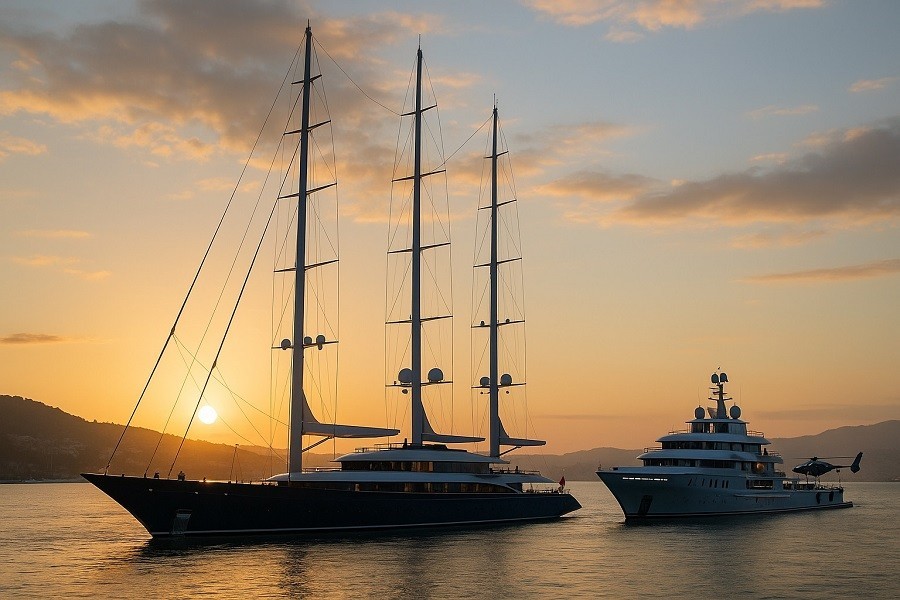
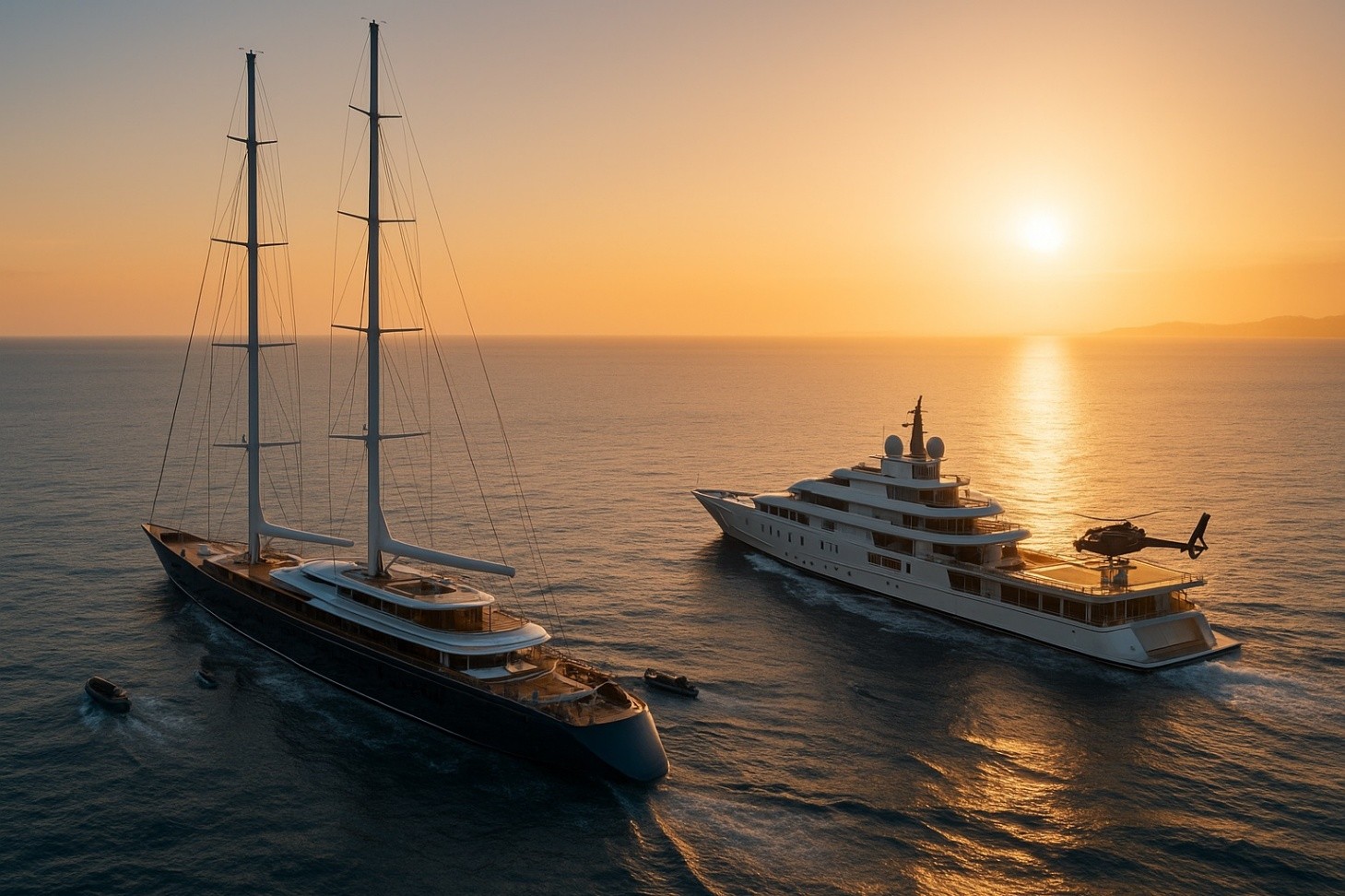
Amazon founder Jeff Bezos took delivery of Koru, a three-masted, 127-meter sailing superyacht reportedly costing around half a billion dollars.
It is the world’s largest sailing yacht, delivered in 2023.
He also operates Abeona, a 75-meter support vessel that ferries toys, tenders, and a helicopter.
These twin assets reflect the emerging ultra-wealth pattern of pairing a flagship yacht with a dedicated shadow ship for logistics and security.
2) Bernard Arnault’s 333-foot superyacht—and flying under the radar
LVMH chair and CEO Bernard Arnault owns Symphony, a 101.5-meter Feadship delivered in 2015 and widely profiled for its scale and specification.
After social-media jet tracking drew attention in 2022, Arnault said he sold LVMH’s private jet and began renting aircraft.
This underscores how privacy itself has become a luxury amenity for some CEOs.
3) Mukesh Ambani’s Antilia: a vertical palace in Mumbai
Reliance Industries’ chairman and managing director, Mukesh Ambani, resides in Antilia, a 27-story, 173-meter tower completed in 2010.
Reported amenities include a ballroom, temple, spa, theater, terrace gardens, and multiple pools.
Even a “snow room,” alongside capacity for 168 cars and nine high-speed elevators.
It remains one of the most expensive private homes on Earth.
4) Mark Zuckerberg’s fortified Kauai compound
Meta’s CEO has assembled more than a thousand acres on Kauai for a private ranch-style complex.
Investigations describe a sprawling, nine-figure project that includes extensive infrastructure, with plans for an underground shelter.
Subsequent reporting shows continued land expansion pushing his holdings above 2,300 acres.
The project has drawn scrutiny for its secrecy and local impact, highlighting how land itself becomes a luxury platform.
5) Elon Musk’s private-jet ecosystem and FAA privacy program
Musk’s travel is anchored by long-range Gulfstream aircraft; aviation trade coverage has chronicled his fleet over time.
In mid-2024, he reactivated the FAA’s Privacy ICAO Address program, which allows planes to fly under temporary IDs to reduce public tracking.
Another example of “operational privacy” as a premium.
6) Larry Ellison’s 98% ownership of the island of Lānaʻi
Oracle cofounder (now chairman/CTO) Larry Ellison purchased 98% of Lānaʻi in 2012 for about $300 million.
Later, it invested heavily in resorts and infrastructure.
Few private holdings anywhere match the geographic sweep of effectively owning an inhabited Hawaiian island.
7) Michael Dell’s $100.5 million New York penthouse
Dell Technologies’ founder and CEO was revealed as the buyer of One57’s duplex penthouse for $100.47 million.
New York City’s first nine-figure apartment sale when it closed in 2014.
The record—confirmed years later—spotlights how top CEOs have reshaped “trophy” real-estate markets in major global cities.
8) Steve Ballmer’s $2 billion NBA team purchase
Former Microsoft CEO Steve Ballmer turned fandom into ownership by acquiring the Los Angeles Clippers for $2 billion in 2014.
This at the time, a record price for a North American sports franchise.
Team ownership has become a modern status asset for billionaire executives, conferring hospitality, branding reach, and cultural influence.
9) Google founders’ 60-year lease of a NASA airfield
While no longer CEOs, Google’s cofounders set a template for executive-scale mobility.
A 60-year, $1.16 billion lease for NASA’s Moffett Field that included Hangar One and runway access used by their private-jet fleet.
The agreement paired a public-benefit restoration with extraordinary aviation convenience.
A model of how elite tech leaders integrate infrastructure into their lifestyles.
10) The Ambani family’s nine-figure “event luxury”
Beyond real estate, the Ambanis have pushed celebrations into the realm of mega-productions.
The 2024 wedding events for Anant Ambani featured global headliners—including Rihanna.
Entertainment fees are reported in the multi-million-dollar range, and total festivities are estimated in the high hundreds of millions.
Celebrity rosters and multi-stage venues underscored how experience itself is curated at an ultra-wealth scale.
Why These 10 Extravagant Luxuries of Billionaire CEOs Matter
Across yachts, aircraft, islands, compounds, and stadium-scale events, three patterns stand out.
First, logistics is a luxury
The addition of support ships to superyachts, private runways or access arrangements, and privacy programs for aircraft all reflect a premium on mobility plus discretion.
These are not mere symbols; they are systems that keep time and attention optimized.
Bezos’s Koru-Abeona pairing and Musk’s use of the FAA privacy framework are emblematic.
Second, land is leverage
From Antilia’s vertical city to island ownership and ranch-scale compounds, land enables self-contained security, hospitality, and operations.
Ambani’s Mumbai tower, Ellison’s Lānaʻi, and Zuckerberg’s Kauai buildout are unusually clear expressions of this trend.
Third, culture is a stage
Whether acquiring a top sports franchise, commissioning a museum-class yacht, or booking A-list performers for private events.
Billionaire CEOs frequently transform cultural platforms into extensions of their personal and corporate brands.
Ballmer’s Clippers purchase, Arnault’s Symphony, and the Ambani wedding series illustrate that reach.
Why Do They Have These Extravagancies?
Ultra-visible assets (record homes, top sports teams, iconic yachts) signal success, stability, and cultural relevance.
Private jets, yacht support ships, and island airstrips cut transit time and waiting. For top executives, time saved often outweighs cost.
High-profile leaders face real security risks. Compounds, private islands, and controlled transport reduce exposure and simplify protection for family and guests.
Avoiding tracking (e.g., aircraft privacy programs) keeps travel, negotiations, and family movements out of the spotlight.
A Note on Scope
This list focuses on well-attested 10 extravagant luxuries of billionaire CEOs and founder-leaders, documented by major news outlets and regulatory filings.
Taken together, the examples show how the “elite level” is defined not only by price tags but by scale, privacy, and infrastructure.
The operational trappings of a life lived far beyond ordinary reality.